



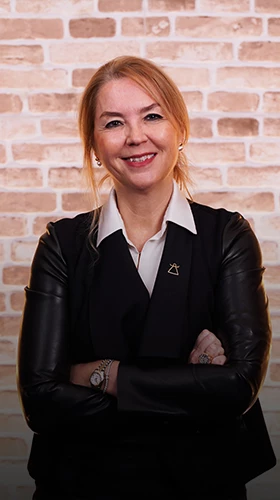
 CHRO, Lecturer, Independent Board Member, Strategic Management Consultant, Author



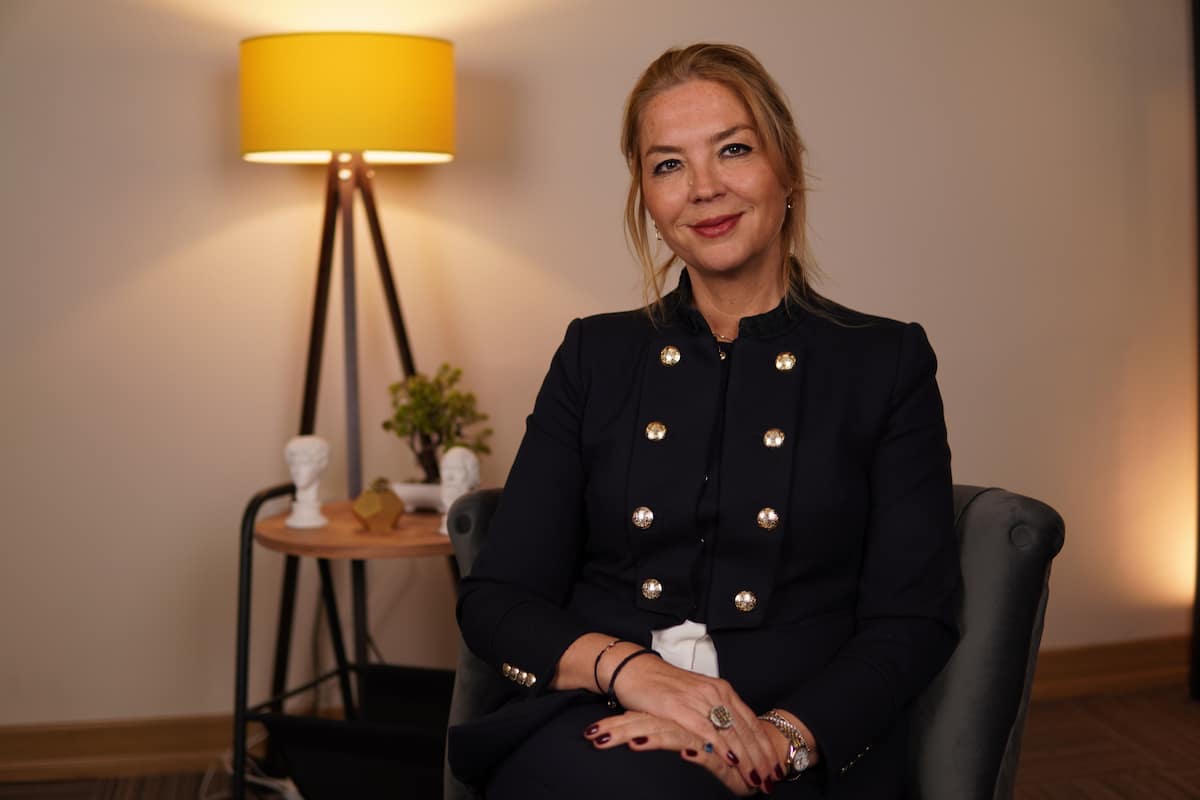



Topic: Enhancing our management skills with a few small tips — making the most of the performance feedback and new year goal-setting season.
Description: We are all human. We work with humans. But do we truly understand how people perceive what we say, how they hear instructions, what they feel, and what drives their behavior? If only every word we said landed exactly as intended... or if we fully understood everything said to us. Let's sharpen our feedback — giving, receiving, and listening — with a few practical tips. The goal is to help both managers and employees see the performance review period as an opportunity rather than an obstacle, equipping them with awareness and practical skills to navigate it more effectively. Together, we build a formula for giving and receiving impactful feedback.
Meaning – Purpose: The New Currency of the Talent War
Topic: Rediscovering the "why" of the work, the organization, and the individual.
Description: In today's business world, the most valuable currency is meaning. Compensation, benefits, and career opportunities still matter — but what truly keeps people engaged, what makes them open their laptop each morning, is the answer they give to the question "why." In an era defined by talent wars, "quiet quitting," and widespread burnout, a sense of purpose is becoming a new force for commitment and attraction. Research shows that 70% of employees prefer to stay in purpose-aligned roles over receiving a pay raise. This seminar explores building bridges between personal values and work, demonstrating an organization's contribution to its community, country, and planet, and offering genuine answers to younger generations asking "who am I, and what is my purpose?" Topics covered include the impact of purpose-driven leadership on engagement and productivity, the signs of burnout and quiet quitting in organizations that have lost their sense of meaning, redesigning the employee experience through a "purpose chain" approach, and making meaning visible across communication, performance, and learning — all illustrated with real-world examples.
The New Role of Human Resources — How Organizations Are Transforming
Topic: Gaining knowledge, expanding influence, and raising managerial awareness in the renaissance of HR.
Description: We can no longer manage human resources with the systems and processes of the 90s, 2000s, or 2010s. Promotion tracks, staffing norms, and rigid job descriptions are fading away. This is a horizon tour for an era in which strategic HR — centered on people and aimed at ensuring business sustainability — is being redefined, and organizational transformation is accelerating. The goal is to position Human Resources not merely as a support function, but as a role that sets direction and drives impact, offering participants new approaches, best-practice examples, behavioral science-based insights, and pathways to creating distinctive value within their own organizations.
Human-Centered Leadership: The Harmony of Technology and People
Topic: Making a difference by keeping people at the center in an age of technology, change, and pressure.
Description: In the age of artificial intelligence, automation, and remote work, the most critical leadership capability is "remembering the human." This talk explores the paths to building cultures of trust, meaning, compassion, and learning — despite the relentless pull of technology, data, and speed. Participants gain broad awareness in human-centered decision-making, creating psychological safety and inclusion, sustaining connection and belonging in a hybrid world, and empathy and meaning management in communicating with new generations.
Artificial Intelligence and New Roles in People Management
Topic: Artificial intelligence is not a software upgrade — it is a cultural transformation.
Description: AI is no longer just a technology; it is a paradigm that transforms organizational culture, leadership mindset, and the pace of the entire organization. In the field of human resources, this transformation is redefining every process — from recruitment to performance management, from talent development to employee experience, and from compensation to rewards. This session examines HR's role in ethics, trust, and learning throughout the digitalization journey, and explores AI's impact on hiring, performance, development, and culture.
Management Lessons from the Stage
Topic: The surprising parallels between staging a play and running a company.
Description: A theater production is a real-world laboratory for strategy, team alignment, crisis management, and leadership. The division of labor, leadership philosophy, and rehearsal management techniques used in Çocuk Genç Sanat Tiyatro's (ÇGST) productions — Pencere, Dolap, and Spiritua — offer insights directly applicable to the corporate world. In this talk, participants discover, in an entertaining and accessible way: the hidden architecture of a play — dramaturgy, time management, coordination, and how front-of-stage and backstage roles mirror real business functions; the "there is no single right way to lead — leadership depends on context" philosophy, drawn from the fact that Hamlet has been staged in countless interpretations over centuries; leadership muscles such as owning your role, managing ego, building trust within a team, and staying composed under pressure; techniques for "shining the spotlight on the right person, creating the right scene, and managing energy" — in companies just as in productions; and how the clarity, simplicity, patience, and role-modeling behaviors developed while working with child actors become leadership advantages with adult teams. Enriched with real stories from rehearsals, backstage, and the stage itself, the talk offers the business world a powerful metaphor: "what happens on stage, happens in the company too."
Storytelling
Topic: Delivering corporate messages in a way that creates emotional connection. Simplifying the language of the company and its leaders. Using storytelling in internal communications. Building bonds through the stories of leaders and employees.
Description: Organizations are like people — the way they tell their story reveals their character. Strong organizations are those that tell their own stories clearly, sincerely, and meaningfully. This seminar demonstrates that corporate messages must carry not just information but emotion, shows what kind of feeling a message leaves when it reaches the other side, and reveals its impact on trust, engagement, and culture. İdil Türkmenoğlu, theater producer and co-founder of Çocuk Genç Sanat Tiyatro, combines the narrative power of the performing arts with the communication dynamics of the business world. Drawing on years of experience both on stage and in corporate settings, she brings the craft of "how to stage a story" into the language of business.
Gender Equality and Equity in the Workplace
Gender equality is a vital topic that questions how imbalances emerge over time — despite women and men being born in roughly equal numbers — and how these imbalances are reinforced by cultural, structural, and even well-intentioned biases. This talk uses striking data to reveal that, despite women's contributions to the global workforce, their share of income and property ownership remains disproportionately low. Through a real corporate case study, it illustrates how practices that appear egalitarian on the surface can quietly turn into unconscious discrimination.
Arrangements made with the intention of accommodating female employees are shown, through concrete examples, to inadvertently block their career advancement. The talk exposes why women who are denied the chance to gain experience during critical evening shifts — a key milestone in career progression — struggle to reach managerial positions. It then demonstrates how intervention through conscious awareness and transparent communication led to an increase in the proportion of female managers, offering tangible steps on the path toward equality. Under this theme, the talk emphasizes how essential it is to identify and eliminate well-intentioned biases in order to achieve genuine equal opportunity.
Equality, Diversity, and Inclusion
Equality and inclusion require a deeper and more nuanced organizational approach — one that goes far beyond simply offering the same opportunities to everyone. This talk draws attention to invisible forms of discrimination, using examples to show how small but impactful biases in the workplace can build into an exclusionary culture. New-generation judgment patterns — such as assuming that an employee who joins a meeting with their camera off must be disengaged — demand a fundamental reexamination of what inclusion truly means in the workplace. Evaluations made without considering factors such as living conditions, family structure, physical disabilities, or the realities of personal life undermine equality in its truest sense.
Speaker İdil Türkmenoğlu emphasizes that recognizing equality merely as a constitutional right is not enough — what matters is how this principle is put into practice at the organizational level. She argues that inclusion must go beyond simply granting the right to apply; it requires ensuring that individuals can actively participate in all processes while their life circumstances are respected. This talk makes a powerful case that in order to increase diversity and create a culture where everyone feels they belong, individuals must be valued not only for their performance but for their full potential.