



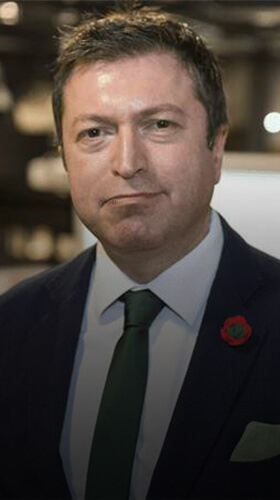
 Journalist, Tech&Trends Editor











The names have changed over time, but the place of ‘artificial intelligence’ in human life, and the debates around it, can be traced back to ancient Greece. Our species’ fear of ‘a higher being smarter than humans’ is nothing new either. So what makes today different? We live in an age where algorithms, in theory and in practice, do many things human intelligence cannot handle. Will machines, software and hardware equipped with intelligence keep serving us as they have so far, or is a rebellion near? When this much intelligence becomes this big, this plentiful and this cheap, what will all these people do for work? This talk takes a realistic, business-focused look at a concept we hear about every day.
- A short history of artificial intelligence and algorithms.
- What will enter our lives and what will leave:
- Will a golden age of creativity begin, or will the nightmare of ‘useless people’ come true?
- Could nationalism, social class and citizenship be redefined?
- Moral transformation: is a world where our reference points and decision centres are no longer human possible? And does it make sense?
- The transformation of professions: could work done only to earn money come to an end?
- Will AI add superpowers to today’s expertise, or replace the experts? What are the shades between black and white?
- In the golden age of AI, can we still speak of customers, marketing and brands? A look at new decision-making and consumption mechanisms.
- Is the human mind equipped to cope with AI-driven communication and marketing? Possible implications for brands and consumers.
- The possible impact of AI on creative fields such as fashion and art.
New World, New Consumer, New Company
With digital tools and services, the world is going through a deep change. The way business is done, from customer to company, is changing, and so are advertising, marketing and communication models. We are informed and influenced through very different tools. Digital channels have become the main axis of communication and marketing, yet many organisations have still not integrated their own processes into this transformation.
- The codes of the new consumer: who they are, what they expect and want, what they dislike, what interests them, which channels they use and how to reach them.
- The next-generation company: what are organisations doing in a digital world that lives and expects service 24 hours a day? The cost of what they do and do not do.
- Next-generation communication: traditional channels are losing reach and impact in advertising and marketing, while standing out in new media gets harder every day. Examples of success and failure.
- The next-generation employee: new digitally supported structures that are emerging and gaining importance in organisations.
Cybersecurity
Cybersecurity, which now reaches into the policies of traditional insurance companies, was until recently a threat that concerned only computer users. Today the security of your data matters everywhere, from the television you watch and the social network you use to your company’s remote-access password and the car you drive. This talk uses a series of examples to show the value of data through history, the struggle to protect and to seize it, and where that struggle stands today.
- Did data security begin with computers and the internet? Historical examples of protecting and losing information.
- What data security means today, why it matters for people and organisations, and the responsibilities it brings.
- Next-generation threats: how the battle of attack and defence has evolved, from the public sector to personal use and from smart devices to social media, told through real cases.
- The biggest hacker: states! Cyber incidents once carried out by malicious individuals and groups now include state-backed operations with huge budgets and resources. A whole new front, from cryptocurrencies to tender intelligence.
- The biggest threat of all: ransomware. Why has ransomware become the nightmare of public and private organisations? Its types and how to protect against it.
Industry 4.0 and Automation
The coronavirus that marked 2020 was without doubt a health crisis. Yet its global social, political and economic effects showed us it was much more than that. In a system where global capitalism has turned every corner of the world into a point of supply, logistics, manufacturing, marketing and sales, it became clear how vital uninterrupted operations, flawless supply chains, traceable logistics and optimised manufacturing are. This talk looks at the new order the technology world spent years describing with terms such as automation, robotics, Industry 4.0 and dark factories, and which the pandemic summed up best.
- The changing relationship between people and labour: are goods and services produced to create jobs or to sustain life? Is a future without automation possible? Does Industry 4.0 simply mean unemployment? The building blocks of the automation age, with examples from history to today.
- Today’s commerce depends on uninterrupted supply, manufacturing and delivery. What solutions does technology offer, and what threats arise without them?
- The geographic effects of robotic production: past advantages can turn into disadvantages. Western markets that relied on cheap labour in the East are cutting costs through automation and bringing manufacturing closer to home. What will micro-factories mean?
- If products and services made cheaper by automation are combined with models such as Universal Basic Income, could a new way of life emerge?
- Stains on the white collar: do the automation and AI solutions of Industry 4.0 concern only blue-collar workers? A look at the transformation of white-collar work.
- How robotic production changes customers and marketing: towards more personal, more focused marketing, manufacturing and sales.
- Next-generation solutions in warehousing and logistics.
- The effects of the automation age on the service sector: next-generation restaurants, food solutions, industrial kitchens, hospitality…
Retail
Humanity has long left the hunter-gatherer age behind, and life today depends on two things: the credit card limit and the supermarket shelf. While retail is enjoying the brightest period in its history in terms of reach and product range, it must also manage a major transformation driven by digitalisation. This talk looks at the past, present and future of retail across a wide field, from producer to consumer and from points of sale to payment methods.
- The history of retail: where did we come from and where are we going? In an age of global chains and competition, do regional (cultural) differences still matter?
- The changing consumer: are they as far from digital as assumed? What are the behavioural codes of the digital customer?
- What does e-commerce mean for retail? Opportunities and threats at local and global scale.
- Amazon! How much more impact can one e-commerce venture have? What it brought into our lives and what it took away.
- The transformation of retail processes: supply, warehousing, logistics, display, optimisation, customer relations, smart payment solutions and more.
- Are physical stores over? How can dealer networks and physical points of sale be made meaningful?
- New consumption trends: subscription models, checkout-free shopping, recommendation systems, innovative marketing…
Automotive
Given that the first car in today’s sense arrived in the 1800s, we might expect a well-settled industry. Yet over the past ten years the automotive sector has gone through a true reincarnation. Expected to deliver far more than simply getting us from A to B, the industry is taking on a new face through competition and partnerships from inside and outside. This talk focuses on the micro and macro transformations of the automotive sector, in which Turkey holds a significant global share as both producer and consumer.
- A brief look at automotive history: thought-provoking outcomes of intent and result.
- Major transformations: connected vehicles, the end of fossil-fuel engines, autonomy, the electric age, software-defined hardware, new options, new personalisation, new production and sales models.
- Vehicles becoming platforms: the growing power and weight of software. What technology brings.
- New areas of partnership and competition: new brands, new ownership models (leasing, sharing, subscription and more), new platform owners (Apple, Google and others).
- Unexpected effects and transformations.
- Change beyond the car: trucks, minibuses, motorcycles, tractors, ships, aircraft…
- New production models: what will they mean for the supply chain?
- The transformation of marketing, the future of points of sale and brand management. The new roles of dealers; areas of opportunity and risk.
Digital Health
Average human life expectancy has almost doubled in just one century. The first condition for making a longer life meaningful is, without doubt, health. This talk examines the promises of a health sector intertwined with technology and the solutions it proposes to deliver on them. Current snapshots, full of examples, from a field transformed end to end by the leverage of software and hardware, from doctors and surgeons to hospitals and pharmacies.
- The overall transformation of health: its definition and expectations have always changed, and today it includes measurability, preventive medicine, personalised drugs, gene therapy, remote monitoring and much more. What exactly do these mean and what do they aim for?
- The problem of the new age: never having enough of life. The expectation of a longer life is understandable philosophically and psychologically. But is it technically and economically possible?
- A large part of the world still cannot access even basic healthcare. Can technology and innovation change this? Work and results from different scales and countries.
- There are nearly 15,000 defined diseases, and the number of patients grows with the population. What does not change is the 24-hour day and a doctor’s physical capacity. What role can technology play in this equation? (Could today’s ‘AI in medicine’ soon become an indispensable assistant to doctors and surgeons?)
- Technology companies are becoming health companies, and health companies are becoming technology companies. Is ‘digital health’ really good for health, or harmful? Was there ever a time when technology did not touch healthcare? What it brought and what it took away.
- In the age of social media, the common ground for everyone, innovative models for communicating with patients caught up in ‘looking up their illness online’.
- Personal health technologies: today’s individual can learn more than ever about their own body and health and can guide their own treatment. (Current examples: mobile and wearable devices, remote health apps, software and hardware.)
- What does AI promise in healthcare? How meaningful and necessary is it?
- What do surgical robots mean for patients, surgeons and the health sector?
- Which roles are automation and robotics aiming for in healthcare?
- 3D printing in healthcare: the start of a new era or an overblown trend?
- The transformation of pharmacies: local and global change in sales, marketing and communication.
Financial Technologies
Money has turned first into plastic cards and then into digital numbers on our screens, bank branches have shrunk to the size of a screen, and insurance policies now cover digital assets. Clearly banking and insurance will not stay the same. But does the job of financial institutions end with building web and mobile branches? This talk examines a finance sector shaped by customers’ changing lives, tools and expectations, and explores new ideas.
- A look at today’s customer: their lives, consumption habits and payment options.
- Is banking without branches, or insurance without agents, possible? No. So where is the ‘middle form’?
- The new competitive arena in finance: what do services that each turn into a bank and a payment solution of their own mean?
- What does a future in which every tech giant holds a banking licence and billions of registered customers mean for the financial giants?
- How is AI, the hidden power of the finance sector, being used, and which areas has it set its sights on?
- Examples of innovative customer service.
- Alternative money and payment services.
- The transformation of the insurance sector.
- Blockchain and cryptocurrencies: really?
Smart Home, Smart City, Smart Living
From our car tyres to the watches on our wrists, we are surrounded by smart sensors. Whatever technology they use, people today produce huge amounts of data every moment. Making sense of that data promises a more comfortable, less troubled and more economical life. This talk looks at the building blocks of a life being reshaped by the innovative services of digital transformation, from individuals to organisations and from the public sector to services.
- Smart homes: when a roof over our heads is no longer enough, what does technology offer?
- Smart speakers, connected light bulbs, programmable small appliances… Snapshots from an ordinary set-up.
- Could 3D printers, which never quite broke through, become a core part of the smart home? ‘Industrial’ solutions from around the world.
- A new definition of ‘living space’. Predictions from today’s expectations to tomorrow. Areas of opportunity and threat.
Smart Nutrition: Next Generation Agriculture, Livestock, and Food
The world’s population has reached an unprecedented size, life expectancy has risen and life has moved from the countryside to cities. As a result, far more people depend on solutions outside themselves for eating and drinking, the most basic condition of survival. This talk focuses on innovative technological solutions that aim to meet the standards and expectations of this new way of life.
- Today’s approach to food: we live at a time when enough food is wasted to feed most of the world’s hungry. Part of the population eats only to survive, another part eats for pleasure. Is there a point of balance? Are traditional methods enough to feed the whole world?
- The transformation of livestock farming: most water resources and arable land are used by livestock farming for food. A new generation of start-ups is looking for alternatives:
- Meat without meat: fully plant-based substitutes that taste exactly like meat (success has been achieved with beef, chicken, pork and fish). The secret of recent billion-dollar companies.
- Lab-grown meat: meat grown from animals’ stem cells, with no additives or chemicals.
- Examples of livestock-based technology start-ups.
- The transformation of agriculture: vertical and soilless farming, indoor solutions, hybrid fields, genetically improved seeds, and the seeds, fertilisers, software and hardware used in these processes.
Tourism
More than 100,000 flights connect one point of the world to another every day. Every year 1.5 billion people travel for tourism alone. Until very recently, travel and accommodation services were used mainly out of necessity (and so offered very few choices). Today they must meet very different expectations with very different meanings. This talk focuses on what tourism is expected to deliver today, and on tomorrow’s areas of opportunity and competition.
- How tourism has changed from yesterday to today: intentions, expectations and solutions.
- New areas of competition: personalised services, the transformation of customer relations, the differentiating power of concept design, creative solutions at small scale…
- Dealing with outside forces: what should we learn from customers loving Airbnb and similar services while the sector criticises them so heavily? Can this competition teach traditional structures something? Examples from around the world.
- The transformation of the hospitality sector: big moves by big chains, next-generation solutions and more.