




 Professor of International Relations · TÜSİAD Global Politics Forum Coordinator









For decades the mantra was "get the state out of the way and let the market handle it"; now the opposite is happening. The US (IRA, CHIPS Act), the EU, China and the Gulf, the major economies, have returned to industrial policy, subsidies, localisation and the protection of strategic sectors. The session first clarifies this global turn and Turkey's development and industrial policy agenda (incentives, domestic production, critical sectors) for a business audience. Yet most companies read it either as "incentive hunting" or as "a regulation to comply with"; that is a narrow view. The real point is this: state strategy is rewriting the rules of the competitive arena. The winners are those who read early where the state is steering and position themselves accordingly, rather than those chasing subsidies. The session treats industrial policy as a strategic map to be read, rather than a cost and compliance item.
What participants gain
- Reading the global industrial policy turn and its implications for Turkey
- Evaluating state strategy as a competitive map
- Strategic positioning beyond incentives and regulation
Technological Competition and the AI Transformation: What Is Business Really Aiming For?
The session lays out the new geopolitics of artificial intelligence and semiconductors: chip wars, export controls, data and platform power, rising techno-nationalism and supply chain security. The corporate race to adopt AI for productivity and automation is taking shape inside this picture. Yet much of the business world is asking the wrong question: "How do I use AI?" The real target lies elsewhere: who controls it, and who makes whom dependent? While you compete with your visible rivals, the decisive player is the one drawing the boundary of the arena: setting the standard, holding the platform, controlling the chip and the model. The session shifts your attention from the tool (how do I use it) to sovereignty (where do I sit on my dependency map).
What participants gain
- Mapping technology geopolitics, supply risk and dependency risk
- Positioning around "whom do I depend on" rather than "how do I use it"
- Reading the power of the boundary-setter (platform, standard, regulator)
The Sources of Uncertainty and How to Manage It
Where does uncertainty come from: geopolitics, technology, climate, supply chains, politics; and how does it reach business? The session first separates the sources of uncertainty and clarifies their effects from pricing to investment, from risk management to crisis preparedness; it refreshes the familiar tools of decision-making under uncertainty, agility and scenario thinking. The real point lies here: conventional corporate wisdom treats transparency as the source of trust and power. Yet excessive transparency makes you readable, predictable and, precisely for that reason, open to manipulation. Power is now defined less by how much you disclose and more by how well you manage your own legibility and the uncertainty around you. Russia turns energy flows into a weapon of uncertainty; China does the same through strategic silence on chip exports. The session unpacks this new workings of power through the lens of uncertainty management.
What participants gain
- Distinguishing the sources of uncertainty and reading their effect on business decisions
- Using uncertainty as a manageable lever
- Telling performative transparency apart from strategic legibility
Geopolitical Literacy: Reading the Key Indicators
The session opens with a tour of geopolitical literacy: the new global map, great power competition (US, China, Russia, EU), rising actors, and energy and supply chain vulnerabilities; plus the key indicators for tracking all of this: risk indices, trade and energy flows, alliance signals. The aim is a framework for spotting risk early and reading opportunity in time. Yet if you watch the indicators asking "when do we return to stability", you are asking the wrong question. The old is dying and the new cannot be born; the interim is permanent, an interregnum. Indicators exist to read the direction of lasting uncertainty rather than a return to normal. The session teaches how to read the key indicators through that lens.
What participants gain
- Reading the new global map and the key geopolitical indicators
- Bringing geopolitical risk into decision and investment processes
- Assessing Turkey's position in the interregnum along the axis of opportunity and risk
From Risk to Uncertainty: Working with Scenarios
The session opens with the risk management discipline business knows well: risk taxonomy, probability × impact scoring, the risk matrix and heat map, response strategies (mitigate, transfer, accept, avoid). Solid tools for mapping the known. Yet not every uncertainty can be assigned a probability. Geopolitical and systemic shocks mostly sit in the "low probability, very high impact" tail and are correlated with one another; the risk matrix underestimates them. Where risk ends, uncertainty begins; and there you need multiple scenarios rather than a single forecast. The session shows the move from risk matrix to scenario, and the division of labour between the two.
What participants gain
- Telling risk from uncertainty: what can be assigned a probability and what cannot
- Seeing the blind spots of the risk matrix (tail risks, correlation)
- Grasping the logic of the shift to scenario thinking and when it is needed
Trust, Polarisation and Belonging: Who Belongs Where?
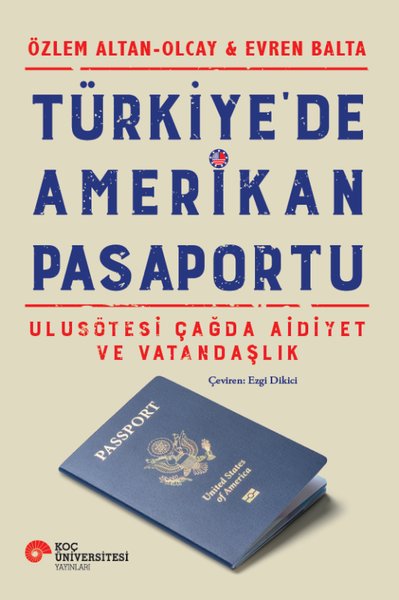
The session makes concrete how polarisation, disinformation and institutional erosion hit companies: brand attacks, accelerating reputational erosion, internal tension, weakening employee engagement. It then turns to changing belonging and citizenship: people are now attached to multiple identities, communities, even multiple passports. This part draws on Balta's award-winning work on citizenship. And it breaks two assumptions. One: in polarised times the reflex to "pick a side" makes the institution fragile; reputation comes from a defensible boundary that knows to whom it is legitimate, rather than from universal approval. The most resilient institutions remain "embedded strangers". Two: loyalty is dead; no one belongs to a single place, people carry a portfolio of belongings and arbitrage between them. The session rethinks trust and engagement in an age of divided belonging.
What participants gain
- Diagnosing early the reputational risk of polarisation and disinformation
- Building a defensible boundary of legitimacy instead of seeking universal approval
- Designing employee and customer engagement in an age of divided belonging and citizenship